Add Row
Add Element
cropper
update
Build Well Texas
update
Add Element
  • Home
  • Categories
    • Construction Technology & Innovation
    • Health, Wellness and Workplace Safety
    • Sustainable Building & Green Construction
    • Equipment
    • Resources
    • Business and Finance
    • Project Management & Best Practices
    • Construction Trends & Industry Insights
    • Community Development
    • Executive Interviews and Company Profiles
    • Design Trends & Space Optimization
June 07.2025
2 Minutes Read

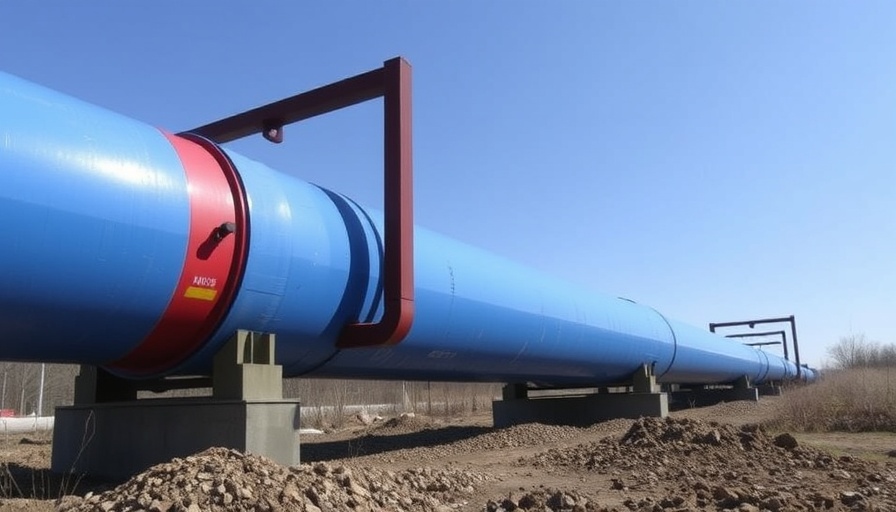
The $1.45 Billion Pipeline: A Game Changer for Suburban Water Supply

$1.45B Pipeline Project Will Deliver Chicago Water to Suburban Communities

Delivering Safe and Sustainable Water Solutions

The $1.45 billion pipeline project set to deliver Chicago's water to suburban communities showcases a bold step forward in infrastructure development. This ambitious initiative not only promises to enhance water accessibility but also its sustainability, transforming the way communities think about their water supply. As infrastructure continues to evolve, understanding the implications of such projects is crucial for stakeholders in commercial construction.

Why This Project Matters to Local Communities

For the suburban communities surrounding Chicago, this project could mean life or quenching thirst of approximately 600,000 residents who may struggle with inconsistent water supply and quality issues. The pipeline will not only deliver fresh water but also ensure that the regions served are tapping into a resource that meets the growing demand for safe drinking water.

Technological Innovations in Pipeline Construction

As the project progresses, it leverages cutting-edge construction technologies that will reduce disruption to the landscapes they traverse. New trenchless techniques allow for less invasive installations, minimizing the impact on local traffic and ecosystems. Additionally, sensors integrated within the pipeline are designed to monitor flow and detect leaks in real-time, promoting operational efficiency and resource conservation.

Project Management Strategies for Success

Managing large-scale projects like this requires impeccable planning and collaboration among multiple stakeholders, from municipal authorities to construction firms. Utilizing agile project management methodologies could enhance adaptability, helping teams to swiftly address challenges and seize opportunities as they arise. Furthermore, engaging local communities through information sessions can foster transparency and trust, critical components for the long-term success of the project.

Funding and Finance: Making It All Work

The $1.45 billion price tag might induce a bit of sticker shock, but smart financing strategies are underway. By partnering with private investors and exploring federal funding avenues, the project planners are looking to keep costs manageable while minimizing the burden on taxpayers. Understanding the dynamics of project finance can unlock opportunities for profit and innovation, making this an essential case study for construction firms.

Looking to the Future: Treating Infrastructure as a Priority

This pipeline project reflects a larger trend of re-investing in existing infrastructure while incorporating modern construction practices. As urban areas continue to grow, coupling technological innovation with sustainable practices will be key to meeting future demands in environmental health and collective well-being. For those in the commercial construction sector, recognizing these trends will be essential for staying competitive.

In conclusion, as the Chicago pipeline project takes shape, stakeholders across the industry should remain acutely aware of the opportunities it presents. Understanding these developments will not only enhance project management practices but may also inspire innovative solutions for similar challenges elsewhere. The real question is: how will you adapt your strategies in light of such transformative projects?

Design Trends & Space Optimization

3 Views

0 Comments

Write A Comment

*
*
Related Posts All Posts
01.15.2026

How Surging Construction Input Prices Impact Project Management

Update Surging Input Costs: What Contractors Need to Know November saw a significant increase in construction input prices, prompting serious discussions within the commercial construction sector. According to the recent analysis by the Associated Builders and Contractors (ABC), input prices for construction rose an eye-catching 3.4% year-over-year, with a 0.6% monthly increase compared to October. This trend is igniting concerns among contractors, particularly as they navigate a challenging economic landscape mostly fueled by tariff-induced price hikes. Understanding the Drivers Behind Rising Costs One of the most significant factors exacerbating construction costs has been the ongoing tariffs affecting a variety of materials. For instance, aluminum mill shapes—heavily impacted by tariffs—soared by 28% from November 2024 to November 2025. The rising prices of other key materials, such as fabricated metal products and structural shapes, only add to the troubling landscape for builders looking to maintain project efficiency and budget. The Impact on Project Bids Interestingly, while material prices have escalated, contractors’ bid prices haven’t kept up, increasing only 2.7% over the past year. Thus, contractors are faced with the double-edged sword of rising input costs against slower bid price growth, resulting in tighter margins and tougher negotiations with clients. Many contractors are now accelerating purchases in hopes of offsetting these anticipated costs, but this rush can also strain supply chains and lead to additional challenges down the line. Energy Costs Add Pressure Energy prices are also weighing heavily on the construction costs. November brought a 10.8% jump in natural gas prices alongside a 1.4% increase for unprocessed energy materials. These hikes not only affect the costs of construction materials but also impact the overall expenses related to operational logistics and project management. What This Means for Commercial Projects in 2026 Entering 2026, contractors and clients alike should brace for more volatility. James Simonson, chief economist at the Associated General Contractors of America, has pointed out that the construction industry’s rising input costs dwarf general inflationary trends. With 62% of contractors listing economic slowdown among their top concerns, addressing these rising costs should become a priority for anyone involved in construction management. Strategies for Managing Rising Costs To navigate this complex matrix of rising prices, contractors must adopt proactive strategies. Initiatives could include tight monitoring of material costs, effective negotiation with suppliers, and leveraging bulk purchasing agreements. Emphasizing sustainable building practices can also lead to long-term savings, especially in a market where resource efficiency is becoming increasingly critical. Final Thoughts: Preparing for Future Construction Trends As the construction industry heads into a year marked by uncertainty, stakeholders are encouraged to maintain a flexible approach when adapting to these input price fluctuations. With a concerted effort towards innovative practices and efficient project management principles, navigating the rising tide of construction costs is feasible. In this evolving landscape, staying informed is paramount. Engage with your suppliers frequently, explore sustainable alternatives, and prepare to adapt strategies to ensure quality outcomes for your projects. Remember, planning today paves the way for successful builds tomorrow.

01.14.2026

Nuclear Power Projects: Are We Building Them Faster Now Than Ever?

Update Are Nuclear Power Projects Actually Speeding Up? Nuclear power, long viewed as a heavyweight contender in the clean energy race, is facing an intriguing question: Are we becoming faster at building these monumental structures compared to the heady days of the 1970s and 1980s? A dive into construction times reveals that the answer isn't as straightforward as one might hope. Unpacking Construction Times: What Does History Tell Us? According to recent analyses, including data from the IAEA, the global average time to erect a nuclear reactor hovers around six to eight years. Some projects can impressively wrap up construction in as little as three to five years, while others drag on for decades. The intricacies of these times often depend on factors like regulatory environments and technological advancements. In fact, the construction of large reactors has reached a crossroads with emerging trends pointing towards modular reactor designs that promise accelerated build times and improved efficiency. Countries like Japan, South Korea, and China stand out as the current leaders in construction efficiency, consistently completing reactors faster than their Western counterparts. A Global Perspective: Are We Slowing Down? Interestingly, while many believe modern regulations slow down progress, a closer examination shows that average construction times globally have not considerably increased since the peak of nuclear construction in the 1970s and 1980s. Studies indicate that reactors constructed post-1990 often see a median time of just 5.7 years, suggesting that the fears of creeping delays may be unfounded. Only about 10% of reactors are completed later than projected, hinting at improvements in planning or changes in efficiency standards. Fast and Slow Builders: Which Countries Lead the Charge? When assessing construction speed, not all nations are created equal. Japan has impressively reduced its average build time to under five years, significantly faster than countries such as the US and the UK, which often find themselves mired in lengthy construction timelines marked by delays. The difference in cultural urgency surrounding energy demands plays a crucial role here; countries like China are navigating a rapidly growing energy market, necessitating swift construction timelines to meet demand. The Case for Modular Reactors: Faster, Smarter, and More Efficient As the nuclear landscape evolves, there is growing interest in smaller modular reactors. These units can be constructed off-site and brought to operational status at multiple locations, decoupling individual reactors from a single construction timeline. This shift not only allows for a more flexible and expedited manufacturing process but also opens the door for repeated learning opportunities, improving construction efficiency over time. Lessons learned from each unit can translate into faster build times for subsequent projects, leveraging the crucial 'learning curve' that has been noted in other energy sectors. What Makes Knowing This Information Relevant? For stakeholders in the construction and energy sectors, understanding the evolving timeline of nuclear power projects is essential not just for project efficiency but also for financial forecasting, resource allocation, and strategic planning. As global ambitions for nuclear power rise, tracking historical data and current trends provides key insights into future project timelines and technological innovation potential. Conclusion: The Future Awaits As we ponder the evolution of nuclear power construction, it’s clear that while we may not be speeding towards completion, we are learning to navigate our way there more efficiently than in the past. The trend toward smaller modular reactors could be a game-changer, offering both swiftness and reliability in meeting our energy needs. For clients of commercial construction companies, staying updated on these developments offers a crucial edge in planning and executing energy projects. Together, let's drive the future of nuclear efficiency!

01.13.2026

Why $26 Billion in Data-Center Investments Matter for Construction Clients

Update The Burgeoning Data-Center Boom in the South In a landscape where $26 billion is earmarked for data center construction in Arkansas and Mississippi, the southern United States is stepping into the futuristic realm of technology-driven infrastructure. This massive investment signals not just the growth of the tech sector, but also the transformation of these states into key players in the national data landscape. What does this mean for local economies, construction firms, and ultimately, for those who rely on these facilities? Why This Investment Matters For construction companies, the prospect of such a substantial project brings a flurry of opportunities. Economic waves from this investment can be felt in various sectors, from labor demands to the procurement of sustainable materials. Increased employment is just one aspect; the projects will likely stimulate local supply chains and boost ancillary services. For tech-savvy clients, these developments are a goldmine of opportunities to improve project outputs, overcome traditional construction inefficiencies, and employ innovative technologies in building processes. Significance of Cost Management in Large Projects Cost management will play a crucial role in the success of this venture. Construction firms will need to leverage their expertise in project management and best practices to ensure that their bids for these ambitious builds are competitive yet realistic. The integration of smart technologies can allow for real-time tracking of expenses, budgeting forecasts, and resource allocations. Embracing Sustainable Building Practices As the data center race heats up, there's a pressing need to incorporate sustainable and resilient building methods. Utilizing green construction practices can offer advantages not only in compliance but also in attracting tenants who prioritize environmentally responsible operations. Companies that champion sustainability will stand out in what is likely to become a fiercely competitive market. Future Opportunities in Project Efficiency Diving into the future, the fundamental question arises: how can construction firms ensure project efficiency amidst such large-scale investments? This brings us to the adoption of automation and AI technologies. From planning stages through construction and to facility management, technology can streamline operations, reduce costs, and optimize workflows. As the demand for rapid scalability rises, firms must adapt by investing in not just human resources, but technological ones as well. A Call for Adaptive Strategies The data center landscape is evolving, and it’s imperative for players in the construction industry to adapt. This is a clarion call for firms to blend tradition with innovation, allowing for greater resilience in their business models. As Arkansas and Mississippi prepare for this monumental surge, the insights gleaned from such a significant investment landscape can ripple across the industry, prompting discussions on how to best harmonize construction prowess with technological advancements. Conclusion: What This Means for Clients For clients in commercial construction, the wave of investment in data centers represents not just potential projects but also a shift in how these facilities can be executed efficiently and sustainably. As technology continues to revolutionize the construction scene, the key takeaway is: embrace innovation to maintain a competitive edge. If you’re keen on understanding how the trends unfolding in Arkansas and Mississippi can be leveraged to enhance project efficiency and outcomes, reach out for a consultation today!

Terms of Service

Privacy Policy

Core Modal Title

Sorry, no results found

You Might Find These Articles Interesting

T
Please Check Your Email
We Will Be Following Up Shortly
*
*
*